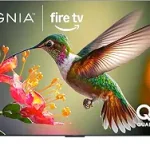
Hisense 50″ E7 Cinema Series Hi-QLED Mini-LED 4K UHD Smart Fire TV (50E7SF)
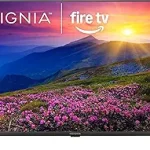
INSIGNIA 50″ Class F50 Series LED 4K UHD Smart Fire TV with Alexa Voice Remote (NS-50F502NA26)
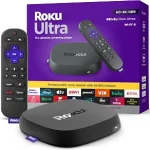
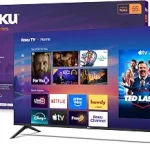
Roku 50-Inch Select Series Smart TV 2026-4K (2160p) QLED TV
Best Size50Inch Tv Buying Guide — Black Friday Deals 2026
A 50-inch TV can suit a living room, bedroom, or shared space when you want a screen in this size class without making the choice on screen size alone. The models here pair that size with different interfaces and feature sets: Hisense offers Mini-LED and a 144-hertz refresh rate, INSIGNIA provides a simpler set of listed essentials, and Roku brings Roku OS with four HDMI ports. Black Friday is a useful time to compare these options, but a promotional message does not tell you whether a particular model fits your setup. Check the exact model, the features you will use, and the offer shown for that variant before deciding.
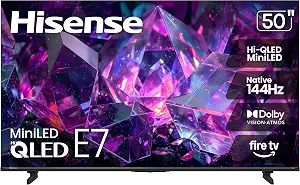
Hisense 50″ E7 Cinema Series Hi-QLED Mini-LED 4K UHD Smart Fire TV (50E7SF)
Check Price on Amazon
The Hisense 50-inch E7 Cinema Series Hi-QLED Mini-LED 4K UHD Smart Fire TV is the Best Overall pick among these featured models. That is an editorial choice based on its listed combination of a 50-inch screen, 4K resolution, Mini-LED backlight, and 144-hertz refresh rate—not a claim that it has been measured against every television. If you want several display specifications represented together in one option, this is the model to put near the top of your comparison list.
Its 4K resolution and Mini-LED backlight give you concrete points to weigh when thinking about how the TV will fit your viewing habits. The 144-hertz refresh rate may also matter to shoppers who specifically prioritize that specification. Consider which of those listed details actually affects your decision: a feature is most useful as a buying criterion when it answers a need you already have, rather than simply making a spec list look longer. The product name identifies it as a Smart Fire TV, and the listed operating system is FireOS.
For a more involved setup, the four HDMI ports provide a specific connection count to compare with the devices you expect to connect. Make a list of your planned inputs before shopping, then check whether the listed count suits that arrangement. AirPlay is the listed screen-mirroring technology, which may be a useful deciding detail if mirroring is part of how you expect to use the screen. Maximum speaker output is listed as 20 watts; treat that as a stated specification, not a guarantee about how audio will sound in your room.
During Black Friday, compare the exact Hisense model and the offer attached to it rather than assuming that a deal headline applies to every E7 television. Confirm that the listing is for 50E7SF and that the features you care about—especially Mini-LED, the 144-hertz refresh rate, port count, and FireOS—match the variant shown. This pick makes the most sense when those specifications align with your priorities. If you would not use them, compare the more straightforward INSIGNIA or Roku choices before making a purchase.
Key specs
| Screen size | Screen Size 50 inches |
| Resolution | Resolution 4K |
| Refresh rate | Refresh Rate 144 hertz |
| Backlight | Display Backlight Technology Mini-LED |
| HDMI ports | Total Number of HDMI Ports 4 |
| Operating system | Operating System FireOS |
| Audio output | Speaker Maximum Output Power 20 watts |
| Screen mirroring | Screen Mirroring Technology AirPlay |
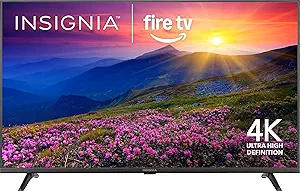
INSIGNIA 50″ Class F50 Series LED 4K UHD Smart Fire TV with Alexa Voice Remote (NS-50F502NA26)
Check Price on Amazon
The INSIGNIA 50-inch Class F50 Series LED 4K UHD Smart Fire TV with Alexa Voice Remote is the Best Budget choice in this group. The label is an editorial distinction among the three listed products; it does not establish a market-wide price ranking or promise that this model will have a particular Black Friday price. Its listed specifications give shoppers a focused set of details to check: 4K resolution, a 60-hertz refresh rate, HDR10 support, FireOS, and three HDMI ports.
This model may suit a shopper who wants a 50-inch 4K TV and prefers to keep the comparison centered on the features explicitly listed for it. HDR10 is the supported HDR format provided here, so check that detail if HDR format is part of your decision. The 60-hertz refresh rate is another concrete point to consider alongside your own viewing priorities. These specifications help define what the listing states; they do not by themselves predict how a particular program, game, or room will look.
The FireOS interface can be a relevant consideration if you are comparing the listed operating systems across these picks. Think about which interface you would rather use and whether you already have a preference, without assuming that an operating-system name alone settles the choice. The three HDMI ports give you a count to compare with the devices you plan to connect. Its listed wireless technology includes Bluetooth and Wi-Fi. The product name also identifies an Alexa Voice Remote, which may be a detail to weigh if that included remote is part of your shopping criteria.
For Black Friday, check that the offer refers to NS-50F502NA26, not merely to an INSIGNIA TV with a similar screen size. Compare the displayed variant and the exact specifications before treating the offer as a match for your shortlist. If your priorities are 4K, HDR10, FireOS, and the listed port count, this is a practical candidate to investigate. If you need a different feature emphasis, compare its facts with the Hisense or Roku model rather than choosing on the Best Budget label alone.
Key specs
| Resolution | Resolution 4K |
| Refresh rate | Refresh Rate 60 hertz |
| HDR format | HDR Format Supported HDR10 |
| Operating system | Operating System FireOS |
| HDMI ports | Total Number of HDMI Ports 3 |
| Screen size | Screen Size 50 inches |
| Wireless technology | Wireless Technology Bluetooth, Wi-Fi |
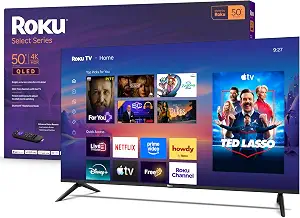
Roku 50-Inch Select Series Smart TV 2026-4K (2160p) QLED TV
Check Price on Amazon
The Roku 50-Inch Select Series Smart TV 2026-4K (2160p) QLED TV is the Best for Roku OS shoppers pick. This editorial label reflects its listed Roku OS operating system, not an independently measured advantage. The provided details include a 50-inch screen, 4K resolution, a 60-hertz refresh rate, and four HDMI ports. Those facts give you a useful starting point if you want to compare an option centered on Roku OS with the two FireOS models.
An operating system is part of the everyday TV experience, so consider whether Roku OS is the interface you want to shop for. If you are already choosing among TVs by interface, this model makes that preference easy to include in the comparison. Its 4K resolution and 60-hertz refresh rate are also listed, letting you judge whether those specifications align with your priorities. The product name includes QLED, but the supplied facts do not give additional panel details to use for a deeper comparison.
The four HDMI ports may help when you are planning connections for more than one device; write down what you expect to attach and compare that plan with the listed count. Bluetooth and Wi-Fi are the stated wireless technologies. If you intend to mount the TV, the listed VESA mount standard is 200 x 100 mm. Check that exact standard against your mounting plan before buying, rather than assuming that a screen-size match is enough to confirm a fit. These details make setup planning part of the decision, not an afterthought.
Black Friday listings can place different variants or model names beside similar promotional language, so confirm that the offer is for this exact Roku model. Check the Roku OS, port count, wireless details, and VESA specification on the variant shown. This choice is most compelling for your shortlist when Roku OS is a positive priority and the listed specifications suit your intended setup. If interface is less important to you, compare the Hisense and INSIGNIA feature lists on the same terms instead of treating the Best for Roku OS shoppers label as proof of broader superiority.
Key specs
| Resolution | Resolution 4K |
| Refresh rate | Refresh Rate 60 hertz |
| Screen size | Screen Size 50 inches |
| HDMI ports | Total Number of HDMI Ports 4 |
| Operating system | Operating System Roku OS |
| Wireless connectivity | Wireless Technology Bluetooth, Wi-Fi |
| VESA mount | VESA Mount Standard 200 x 100 mm |
Begin with the way you expect to use the screen
Before comparing listings, picture the ordinary moments when the TV will be on: catching a show after work, sharing a program with family, or keeping a screen in a room used for more than one purpose. Those scenarios help turn a long feature list into a short set of priorities. All three picks are listed as 50-inch TVs with 4K resolution, so the more useful distinctions here are their other stated features and the interface you prefer.
If refresh rate is high on your list, note that the Hisense is listed at 144 hertz, while the INSIGNIA and Roku models are listed at 60 hertz. That is a specification comparison, not a promise about how content will appear. Decide whether the distinction matters for the way you plan to watch before letting it dominate the choice. Similarly, the Hisense lists a Mini-LED backlight, and the INSIGNIA lists HDR10 support. Keep each detail tied to your own priorities rather than treating every specification as equally important.
Black Friday can make it tempting to scan for a headline offer first. A steadier approach is to write down the two or three features you genuinely want, then compare only the listings that meet those requirements. That keeps a promotional message from becoming a substitute for deciding what suits your room, viewing routine, and budget. You can then check the exact variant and offer without losing sight of why you started shopping.
Compare the interfaces you will interact with
The Hisense and INSIGNIA options list FireOS, while the Roku Select lists Roku OS. If the television interface is central to your choice, treat that difference as a primary shopping criterion rather than a minor line in the product details. Choose the platform you want to navigate, then look at the other specifications on that model to see whether the complete package fits your plans. The provided facts identify the operating systems but do not describe app catalogs or interface performance, so avoid assuming details beyond the listed names.
Consider who will use the TV and how they will approach it day to day. A household that has a clear interface preference can put that preference first; a shopper without one can compare connection counts, display specifications, and mounting needs instead. The INSIGNIA product name includes an Alexa Voice Remote, and AirPlay is the listed screen-mirroring technology for the Hisense. Those are specific distinctions to consider if they matter to your intended use.
When Black Friday offers appear, make sure the interface in the listing belongs to the exact model you have chosen. A similarly named TV may not be the same variant, and a deal headline by itself does not establish that the listed operating system or another detail applies. Keep the model name and your short priority list together as you compare.
Map your connections before settling on a model
Count the devices you expect to connect and note which connections you will need at the same time. The Hisense and Roku listings each state four HDMI ports; the INSIGNIA lists three. That count gives you a concrete way to assess whether a model suits your planned setup. It does not tell you which particular devices you own or what you will connect, so make the inventory yourself rather than assuming a port count is sufficient for every household.
Wireless details also differ in what is stated. Bluetooth and Wi-Fi are listed for both INSIGNIA and Roku. The Hisense facts identify AirPlay as its screen-mirroring technology. If you plan to use a wireless connection or screen mirroring, check the relevant listed detail against your own expectations. Do not assume that a feature mentioned for one model is included on another unless its listing confirms it.
Black Friday browsing often puts several product pages in front of you at once. Keep a simple note with the model name, HDMI count, operating system, and any wireless feature you care about. That makes it easier to revisit a listing and notice when a promotional page refers to a different variant. If you are undecided, first identify the connections you truly require; then use the remaining differences to break a tie.
Think through placement and mounting requirements
A screen that suits your viewing habits still needs to make sense in the space where you plan to use it. Consider where the TV will sit, how you expect to view it, and what other items will share that area. The listed screen size is 50 inches for each model, but this alone does not establish whether a particular stand or wall location will work. Check the full product listing for the details you need to make a placement decision.
The Roku model has a listed VESA mount standard of 200 x 100 mm. If wall mounting is part of your plan, compare that exact standard with the mount you intend to use and verify the fit before purchasing. The supplied facts do not provide a VESA specification for the other two options, so do not infer one from their screen size or product names. For any model, confirm relevant mounting and placement details in the exact listing rather than relying on assumptions.
A Black Friday offer is still only a good fit if the product suits the space and setup you have in mind. Before checkout, revisit your placement plan and confirm the exact model and any required mounting information. If you are buying for a room used in different ways, think about how the TV will fit into the normal routine, not only how it looks on a product page. This practical check can help prevent a quick promotion from rushing a decision you have not fully considered.
Use a focused checklist when offers appear
Start with the exact model number or name, then verify the screen size and the specifications that matter most to you. For this selection, that may mean checking the Hisense Mini-LED backlight and 144-hertz refresh rate, the INSIGNIA HDR10 support and FireOS, or the Roku OS and VESA mount standard. The right checklist depends on your intended setup; there is no need to treat every listed feature as a deciding factor.
Next, compare the offer shown for the precise variant you want. Do not assume that Black Friday wording applies to every model in a series, or that a promotional message establishes a discount, stock status, or a feature not stated on the product page. Read the listing details alongside the offer and confirm that the model name and variant match. If an important specification is unclear, pause and verify it rather than filling in the gap with an assumption.
Finally, compare the complete fit, not just the headline. Think about the interface, port count, wireless details, resolution, and mounting plan in the context of your own needs. A useful choice is the one whose confirmed details match your priorities at an offer you are willing to accept. Keeping that standard in mind makes Black Friday comparisons more deliberate and helps you avoid choosing a TV solely because a listing looks urgent.
Make your Black Friday choice
These three TVs share a 50-inch screen size and 4K resolution, but their listed differences point to distinct shopping priorities. Consider Hisense for its Mini-LED backlight and 144-hertz refresh rate, INSIGNIA for its listed HDR10 support and FireOS, or Roku if Roku OS is the interface you want. Before acting on a Black Friday offer, verify the exact model, variant, and features that matter to your setup. A clear priority list makes it easier to compare the offer on its actual merits and choose a TV that fits your plans.