Best Miter Saw Buying Guide — Black Friday Deals 2026
A miter saw decision starts with the cuts you expect to make, then narrows to the adjustments, capacity, and workspace that fit those plans. The featured choices cover different priorities: the DEWALT DWS780 is the Best Overall pick, the Metabo HPT C10FCG2 is the Best Budget pick, and the SKIL MS6305-00 is the Best for Wide Crosscuts. Those labels are editorial choices among these products, not claims of tested superiority. During Black Friday, compare the exact model and variant shown in an offer rather than relying on a broad product name or sale message. Check which specifications matter for your work, and weigh them against how you will position and use the saw.
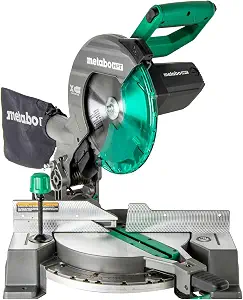
Metabo HPT 10-Inch Compound Miter Saw, 15-Amp, Single Bevel, C10FCG2
The Metabo HPT C10FCG2 is the Best Budget pick in this guide, an editorial choice rather than a statement about measured value or current pricing. Its listed configuration is a ten-inch compound miter saw with a 15-Amp motor, single bevel, and corded electric power. The stated voltage is 120 volts, and its no-load speed is up to 5,000 RPM. That combination gives you concrete details to compare when a planned project calls for a corded saw and a left-bevel adjustment. The model’s format may be worth considering for shoppers whose cut list does not call for the SKIL’s stated wide-crosscut capacity.
For angle work, the C10FCG2 has a miter range of 0-52° left and right and an adjustable bevel range of 0-45° left. Those ranges help you check whether the listed adjustments align with your intended cuts. Because it is identified as single bevel, consider how that arrangement fits your workflow if you anticipate changing bevel direction during a project. The specifications provided do not list a crosscut capacity, so look up the exact listing details when the width or thickness of your material is a deciding factor. Avoid treating blade size or speed alone as a substitute for confirming capacity.
Workspace and setup belong in the decision alongside angle settings. The listed dimensions are 23.6″L x 18.3″W x 21.8″H, and the weight is 24.2 pounds. Use those figures to assess the space you can allocate and how you will handle the saw in your own setup; they do not, by themselves, establish how convenient it will be to move or store. During Black Friday, check that the offer names the C10FCG2 and that its variant matches the product you mean to compare. Look at the exact listing for any details your job requires, including capacity and included items, rather than assuming they from a general offer description. The Best Budget label identifies this guide’s choice, not an assertion of a sale price, discount, or lowest market cost.
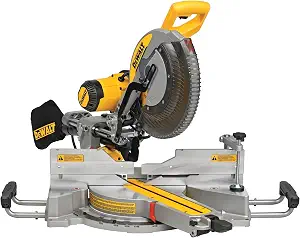
The DEWALT DWS780 earns the Best Overall label here as an editorial choice among these three saws. Its listed format is a 12-inch double bevel miter saw, with a corded electric power source and a stated voltage of 110 volts. For a project plan involving repeated angled or bevel adjustments, the double-bevel designation gives shoppers a useful format distinction to consider. The supplied specifications do not state a bevel range, so check the listing details if a particular angle is essential to your work. This is a sensible option to investigate when you want the larger stated blade size in this selection and are comparing it with the ten-inch models.
Before Black Friday, write down the kinds of pieces and cuts you need the saw to handle, then check whether the DWS780’s listed details answer those needs. The blade is 12 inches long, and the stated speed is 3800 rpm. Its blade has 80 teeth, while the listed cutting angle is 90 degrees. Those details are useful points of comparison, but they do not establish a particular finish, capacity, or result for your material. If your plan depends on an angled cut or a specific crosscut dimension, verify that requirement in the exact product listing rather than assuming it from the model name.
Think about the practical sequence of work, too. A corded saw means your setup plan should include where the power connection will be, and the area around the saw should suit the pieces you intend to position. These are planning considerations, not claims about the product’s performance or included accessories. For Black Friday, confirm that an offer is for the DWS780 and not another DEWALT miter saw or a different configuration. Compare the exact listing’s specifications and variant with your project checklist; a promotion alone cannot tell you whether the saw’s blade size, stated speed, tooth count, and cutting-angle detail match your priorities. The Best Overall label is a guide to this article’s selection, not a market-wide award.
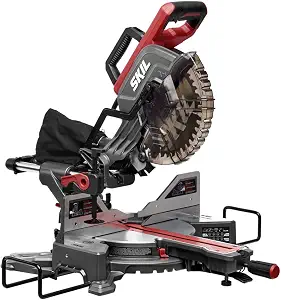
The SKIL MS6305-00 is the Best for Wide Crosscuts choice in this guide, based on its supplied capacity detail rather than a claim of measured superiority. It is a ten-inch dual bevel sliding compound miter saw with a corded electric power source. Its stated crosscut capacity is lumber up to 2×12 at 90 degrees. If your project list includes wider stock, that specific capacity is a helpful point to compare with the work you have planned. Confirm that the material and cut angle you need correspond to the stated condition; the listed capacity is for a 90-degree cut.
The saw’s listed motor speed is 4800 rpm. Its miter angles extend up to 50 degrees left and right, with 11 positive stops at the most-used angles. The dual-bevel details list four positive-stop positions at 48° and 45° left, 0°, and 45° right. Those settings offer concrete information for planning repeat angle changes. If your work depends on a setting not named in those details, check the exact product listing before deciding. The supplied information does not provide a cutting capacity for every possible angle, so avoid assuming that the 90-degree crosscut figure applies to other cuts.
The listed blade length is ten inches and the saw weighs 39.4 pounds. Consider those details while planning where it will sit and how you will arrange the work area; the weight is not a promise about how easy it is to transport. For Black Friday, make sure the product page is for the MS6305-00 and compare the exact configuration, not just a similar SKIL name or a sale headline. Check any project-critical details directly, especially if the cut list involves stock dimensions or angles beyond the stated capacity and stops. This pick is particularly relevant when the stated wide-crosscut figure fits your needs, while a different model may suit other priorities. The label explains why it is included, not a test result.
Key specs
Power source
Corded Electric
Motor speed
4800 rpm
Dual bevel positions
Perform cuts in four positive stop positions at 48° & 45° left, 0°, and 45° right
Cutting capacity
Cross cuts lumber up to 2×12 at 90 degrees
Miter angles
Cuts up to 50 degrees left and right with 11 positive stops at most used angles
Blade length
10 inches
Weight
39.4 pounds
Turn planned cuts into a shortlist
Start by describing the work rather than choosing a blade size first. Note whether your projects mainly call for straight crosscuts, mitered ends, bevels, or a mix, and identify any material dimensions that are non-negotiable. That list will help distinguish the SKIL’s stated crosscut capacity of lumber up to 2×12 at 90 degrees from the other supplied details. The capacity is tied to that angle, so check the exact listing for any other cut your project needs. For the DEWALT and Metabo HPT, the records here do not state crosscut capacity; do not fill that gap by inference.
Next, decide which adjustment routine sounds appropriate. The Metabo HPT lists a single bevel with a left range, while the DEWALT is named as a double-bevel saw and the SKIL lists dual-bevel positions. Compare those formats with the direction changes you anticipate. Black Friday browsing can make it tempting to begin with an offer, but the project list should remain your filter: a headline deal does not establish that the listed saw meets a particular capacity or angle requirement. Keep the model name beside each required cut as you compare.
Decide how much angle flexibility matters
Miter and bevel adjustments answer different planning questions, so check them separately. The Metabo HPT lists a 0-52° miter range left and right and a 0-45° bevel range left. The SKIL lists miter cuts up to 50 degrees in either direction, along with its stated bevel positions and positive stops. These details can help you decide whether the adjustments you expect to use are represented in the product information. They do not prove the saw will cover an unlisted setting, so look it up if a particular angle is important.
The DEWALT’s name identifies it as double bevel, but the supplied details do not give its bevel range or miter range. Treat that as a prompt to inspect the exact product page, not a reason to assume a particular setting. Positive stops, where specified, are another detail to compare with your intended routine. If your work repeats a known angle, the listed stops may be relevant; if it needs a less common one, verify the adjustment details first. During Black Friday, make these checks before comparing offers, so your choice rests on the configuration rather than the sale wording.
Match the listed capacity to the material
A blade measurement is not the same as a cut-capacity statement. The DEWALT is listed with a 12-inch blade, while the Metabo HPT and SKIL each have ten-inch blades. Only the SKIL’s supplied facts give a specific crosscut capacity: lumber up to 2×12 at 90 degrees. If your work calls for stock of a particular size, use an explicit capacity detail for the relevant cut rather than treating blade length as a guarantee. For the other models, consult the exact listing for capacity information before making a material-based decision.
Think about the whole project sequence as well. A wide piece may affect how you position and support your work, while a series of angled cuts may put more emphasis on the listed miter and bevel adjustments. The available specifications do not describe every material, cut, or setup condition, so do not generalize a figure beyond its stated angle. A Black Friday offer is worth comparing only after the saw’s stated capacity aligns with the task you intend to do. When a listing does not answer a critical question, seek that detail before treating the model as a match.
Plan the setup around power and space
All three saws are listed as corded electric, which makes the location of a power connection part of your workspace plan. Consider the space available for the saw and for arranging the material you intend to cut. The Metabo HPT has listed dimensions of 23.6″L x 18.3″W x 21.8″H, giving you specific figures to compare with your available area. The other supplied records do not provide dimensions, so check their listings if a precise footprint matters. Do not assume that a model name or blade size tells you how much room your setup needs.
Weight can also inform planning without predicting how manageable a saw will feel in practice. The Metabo HPT is listed at 24.2 pounds and the SKIL at 39.4 pounds; no weight is supplied here for the DEWALT. Use these facts only where they are available, and consider how the saw will be positioned, stored, or moved in your circumstances. Black Friday is a useful time to compare exact product pages, but the offer should not replace a check of the setup details that matter to your space. If a missing dimension or weight affects your decision, verify it directly.
Compare exact models before choosing an offer
During Black Friday, compare the named model and its listed configuration rather than relying on a broad brand search or a promotional phrase. The product names here identify the DEWALT DWS780, Metabo HPT C10FCG2, and SKIL MS6305-00. Confirm that the offer refers to the model you intend to evaluate, and read the specifications attached to that exact listing. Do not assume that details for another saw in the same product family apply to it. A listed promotion also does not establish whether a saw suits your project; your required cuts and workspace remain the deciding checks.
Keep a short comparison note with the facts that matter most: blade size, stated speed, angle information, any explicit capacity, power source, and dimensions or weight when supplied. For example, the DEWALT’s 80-tooth blade detail and 3800 rpm speed can be compared as listed specifications, not as proof of a particular finish. The Metabo HPT’s no-load speed is stated as up to 5,000 RPM, so retain that qualification when comparing it with another speed figure. Black Friday offer language may change, but careful model and specification checks keep the decision tied to your actual requirements.
Make your Black Friday choice
Choose the saw whose stated details answer the most important questions on your project list. The DEWALT DWS780 is this guide’s Best Overall choice, the Metabo HPT C10FCG2 its Best Budget choice, and the SKIL MS6305-00 its Best for Wide Crosscuts choice; each label is limited to this selection. Before acting on a Black Friday offer, confirm the exact model and verify any capacity, angle, or setup detail your work depends on. If a needed specification is not provided here, check the product listing rather than guessing. A careful match matters more than a sale message.