Best Muck Boot Buying Guide — Black Friday Deals 2026
Choosing a muck boot starts with the conditions and tasks you expect it to handle, not the size of a Black Friday banner. The three options here serve different priorities: the Arctic Pro emphasizes cold-weather details, the Arctic Sport Tall combines insulation with a waterproof shell, and the Chore Classic specifies a steel toe. Those distinctions can narrow your shortlist, but they do not settle personal fit or suitability for a particular job. During Black Friday, compare the exact model and variant on offer, then check its listed features against your own needs before deciding.
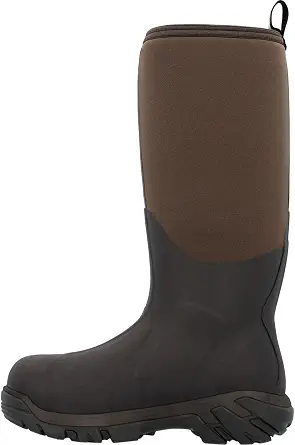
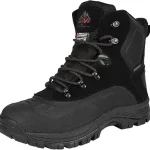
MUCK Men’s Arctic Pro Insulated Boot (ASIN B0042ZNTQQ)
Best Overall is an editorial choice for the MUCK Men’s Arctic Pro Insulated Boot among these three options, not a claim of tested or market-wide superiority. Its listed comfort range is -60 °F/-50 °C to 30 °F/-1 °C, making that specification a useful first point of comparison if cold is your main concern. The range is a product detail, not a guarantee that every wearer will feel comfortable in those conditions. Think about the temperatures and duration you actually expect, and consider whether the boot’s stated design fits that use. Black Friday is a chance to compare the exact Arctic Pro offer, not a reason to treat the range as a promise of personal comfort.
Several construction details add context to that cold-weather focus. The boot has fleece linings, 8 mm neoprene that adjusts to the contours of your feet, and 2 mm of thermal foam beneath the footbed. Lightweight EVA insoles are also listed. These are separate features: the lining, neoprene, and underfoot foam describe different parts of the boot, so do not collapse them into one warmth measure. If you are deciding between this model and another, ask which of those details matters most for your routine. For example, someone comparing options for extended outdoor tasks may want to pay close attention to both the stated comfort range and the underfoot insulation.
The Arctic Pro also lists double reinforcement in the instep, heel and Achilles, along with Bob-Tracker outsoles. Those details may be useful when comparing the boot’s specified construction with the demands of your everyday activities, but they do not establish a particular level of durability or grip. The Best Overall label simply reflects its combination of listed cold-weather and structural features within this guide. Before a Black Friday purchase, confirm that the listing is for the Arctic Pro and review the offered size and variant details. If your priority instead is a waterproof claim or a steel toe, compare the other models directly rather than assuming this boot includes features not specified here.
Key specs
Comfort range
comfort range of -60 °F/-50 °C to 30 °F/-1 °C
Footbed insulation
2 mm of thermal foam beneath the footbed
Lining
fleece boot linings
Neoprene
8 mm neoprene that adjust to the contours of your feet
Insoles
Lightweight EVA insoles
Reinforcement
double reinforcement in the instep, heel and Achilles
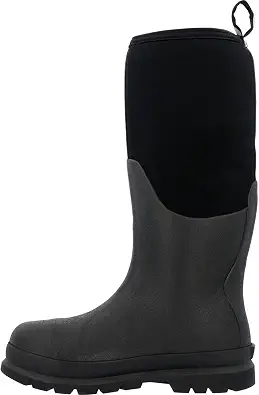
MUCK Chore Classic Men’s Steel Toe Boot (ASIN B000WG7IHU)
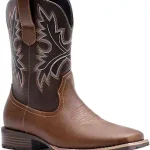
The MUCK Chore Classic Men’s Steel Toe Boot is the guide’s Best for Steel-Toe Construction. That label identifies its most clearly stated distinction in this group: the product is a men’s boot with a steel toe. It is an editorial way to organize the choices, not evidence of certification, suitability for a named workplace, or superiority in a safety comparison. If a steel toe is part of your job’s requirements, use the exact requirements set by your employer or worksite and verify the product information against them. The supplied details do not specify a rating or other protective features, so do not infer them from the toe type alone.
This option may be a sensible starting point for shoppers whose first filter is the steel toe rather than cold-weather insulation. Its product name identifies it as a Chore Classic boot, but the available specifications do not describe its lining, insulation, shell, outsole, or waterproofing. That is a reason to check the actual listing for details you need, not to assume those features are absent. Similarly, a Black Friday offer should be evaluated by its exact model and variant; a category name or promotional label is not enough to confirm that the listed item matches your intended use.
For everyday decision-making, write down what the steel toe needs to address and what other properties you still need to verify. A person comparing options for a work routine might prioritize required toe protection, then check the listing for fit information and any additional job-specific specifications. The available facts establish the toe type and product category, but leave those other questions open. The Best for Steel-Toe Construction label is useful as a quick shortlist cue because it points directly to the stated feature. During Black Friday, keep that distinction clear: compare the Chore Classic with the Arctic models on the features that are actually listed, and avoid treating a lower or highlighted offer as a substitute for checking suitability.
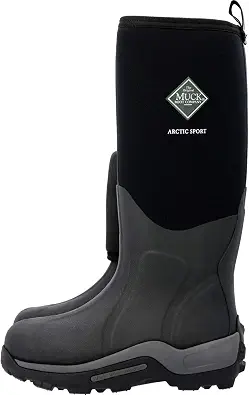
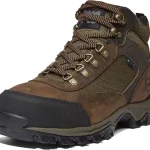
Best Budget is the editorial label for the MUCK Men’s Arctic Sport Tall in this guide. It does not assert a current price advantage or predict a Black Friday discount; it marks this as one option to consider when comparing the three featured boots. Its listed package of details includes a warm fleece lining, thermal foam under the footbed, and 5 mm neoprene. If you want an insulated tall boot, these specifications give you concrete points to check against your expected conditions. No comfort range is provided here, so avoid using the Arctic Pro’s temperature range to estimate how this model will feel.
The Arctic Sport Tall is described as waterproof and insulated, with a fully-sealed rubber shell that extends high above the ankle. It also has a contoured midsole and molded lugs. Those are useful construction details to compare when your routine makes shell coverage, underfoot construction, or the listed sole design relevant. They do not establish how the boot will fit your feet or perform on a particular surface. For a shopper weighing it against the Arctic Pro, the most direct distinction in the supplied details is that waterproofing is explicitly stated for the Arctic Sport Tall, while the Arctic Pro’s listed facts focus on its comfort range and other cold-weather features.
Treat the Best Budget label as a prompt to compare the actual offer rather than as a price claim. During Black Friday, confirm the listing names the Arctic Sport Tall and inspect the offered variant and size before making a decision. Then compare its stated waterproof and insulation details with your requirements. If you need a steel toe, the Chore Classic is the option here that specifies one; the Arctic Sport Tall’s supplied facts do not state a steel toe. If you need a particular warmth range, the listing would need to answer that question because no range is given in these product details. A careful comparison lets the model’s stated features—not the label alone—guide your shortlist.
Key specs
Lining
warm fleece lining
Underfoot insulation
thermal foam under the footbed
Neoprene thickness
5 mm neoprene
Midsole
contoured midsole
Shell
fully-sealed rubber shell that extends high above the ankle
Sole
molded lugs
Waterproofing
Waterproof and insulated
Start with the constraint you cannot compromise
Before comparing prices, name the condition or requirement that would rule a boot in or out. If cold is the main concern, the Arctic Pro is the only option here with a stated comfort range, and its fleece lining, 8 mm neoprene, and thermal foam beneath the footbed offer further details to weigh. If an explicitly stated waterproof design matters, the Arctic Sport Tall is the model whose facts identify it as waterproof and insulated. If your work calls for a steel toe, the Chore Classic is the listed choice with that feature. These are different kinds of information, not interchangeable claims.
Put any workplace requirements in their own category. The Chore Classic’s steel toe does not, by itself, confirm compliance with a particular rule; check the actual requirements and product listing. Likewise, a waterproof description or a comfort range cannot answer every question about fit or task suitability. Black Friday promotions can make several models appear comparable at a glance, but the first useful filter is the feature your routine requires. Once that is clear, compare the remaining options on the details that matter to you, rather than trying to make one boot serve every possible purpose.
Read warmth details as distinct pieces of information
Insulation descriptions can help you compare the Arctic models, but each specification addresses a different part of the design. The Arctic Pro lists fleece linings, 8 mm neoprene, and 2 mm of thermal foam beneath the footbed, as well as a comfort range of -60 °F/-50 °C to 30 °F/-1 °C. The Arctic Sport Tall lists a warm fleece lining, 5 mm neoprene, and thermal foam under the footbed, but no comfort range in the supplied details. Keep those facts attached to their respective models rather than using one boot’s range to fill a gap for the other.
Your own activity also matters: the same listed construction may not answer how warm or comfortable a boot will feel during your particular routine. Consider where you expect exposure, how long you will be outside, and what you typically wear with the boot, then use the listing to verify any fit or use questions it can answer. Do not translate the Arctic Pro’s range into a personal guarantee. On Black Friday, a comparison table or product page may make insulation figures prominent; read each one in its original context and resist reducing warmth to a single number.
Compare the shell and sole to your day
When wet conditions are part of the decision, the Arctic Sport Tall offers the clearest stated information in this group: it is described as waterproof and insulated, and its fully-sealed rubber shell extends high above the ankle. Its molded lugs are another listed construction detail. Those facts can help you decide whether this model deserves a closer look, but they do not predict performance in a particular setting. The Arctic Pro lists Bob-Tracker outsoles, while the Chore Classic details provided here identify its steel toe but do not specify a sole or waterproofing.
Use those differences to form questions, not conclusions. If you need to know how a particular boot handles a surface or whether a shell suits a specific task, look for an explicit answer in the actual product information. Do not assume that a named outsole establishes grip on every surface, or that missing details prove a feature is absent. During Black Friday, compare the exact model page and variant, because broad category wording can obscure which design the offer refers to. Choose only after the relevant construction details line up with your needs.
Make fit a check of your own needs
The supplied specifications do not settle how any of these boots will fit a particular person. The Arctic Pro’s 8 mm neoprene is described as adjusting to the contours of your feet, and the boot also has lightweight EVA insoles; those are useful details to notice, but they cannot replace checking fit information for the size and variant you intend to buy. The Arctic Sport Tall lists a contoured midsole, which is likewise a design detail rather than a promise of comfort for every foot. The Chore Classic facts do not give fit or comfort specifications.
Before checkout, consider the socks and circumstances you expect to pair with the boot, then verify whatever sizing guidance the listing provides. If you have a specific fit concern, look for information that addresses it instead of assuming that insulation, a contoured midsole, or a flexible-sounding description answers the question. Black Friday urgency is no reason to skip this step: an attractive offer on the wrong size or model is not a useful match. Compare the exact listing and make your comfort decision from the available fit information, not from the editorial labels in this guide.
Use Black Friday listings as a final verification step
Once you have narrowed the choice by task, warmth, shell details, and fit, inspect the Black Friday listing itself. Confirm the displayed product name matches the model you selected: Arctic Pro, Arctic Sport Tall, or Chore Classic Men’s Steel Toe Boot. Check the exact variant and size shown, and read the included product details for any requirement that matters to you. This step is especially important when a promotion groups related styles together or uses a broad boot category label. No offer should be treated as proof that a listing has a feature unless that feature is stated for the exact item.
Compare the offer on its own terms without assuming there is a discount, a particular price, or a stock condition. If the details do not answer a key question—such as a job-specific protection requirement or a fit concern—pause and seek confirmation in the listing before deciding. The Best Overall, Best Budget, and Best for Steel-Toe Construction labels in this guide are editorial shortcuts for comparing the supplied products, not evidence about a promotion. A disciplined final check keeps the decision tied to the product you mean to buy rather than the surrounding Black Friday language.
Make your Black Friday choice
A practical shortlist can be simple: consider the Arctic Pro when its stated cold-weather details match your priorities, the Arctic Sport Tall when its waterproof and insulated design is relevant, and the Chore Classic when a steel toe is the feature you are seeking. Then verify personal fit and any requirements that the supplied specifications do not answer. Black Friday is a useful time to compare exact listings, but a promotion should not replace that check. Choose the model and variant whose stated details best match your routine, and leave unverified assumptions out of the decision.