Sony Alpha a6400 Mirrorless Camera (ASIN B07MV3P7M8)
Best Mirrorless Camera Buying Guide — Black Friday Deals 2026
Choosing a mirrorless camera is easier when you start with how you plan to use it: everyday photos, self-framed video, or a mix of both. These options offer different combinations of bundled lenses, screens, video specifications, and shooting-rate figures. The Canon EOS R100 pairs an APS-C sensor with a kit lens that has optical image stabilization; Nikon’s Z 30 combines a flip-out touchscreen with 4K video; and Sony’s a6400 includes a 16-50mm lens and a flip screen. For Black Friday, treat the listing as a configuration to check, not a promise of a promotion. Match the exact model and included lens to your priorities before weighing the offer.
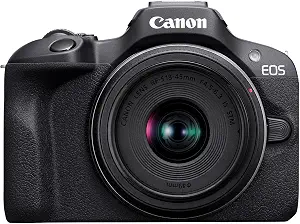
Canon EOS R100 Mirrorless Camera RF-S18-45mm F4.5-6.3 is STM Lens Kit
Canon EOS R100 Mirrorless Camera RF-S18-45mm F4.5-6.3 is STM Lens Kit (ASIN B0C5PGRP7V)
The Canon EOS R100 is the Best Budget choice in this group as an editorial recommendation, not a statement about its current price or a Black Friday discount. It pairs a 24.1 megapixel CMOS APS-C sensor with the Canon RF-S18-45mm F4.5-6.3 IS STM Lens Kit. That combination gives shoppers an identifiable starting package for everyday still photography, rather than leaving the included lens unspecified. A three-inch screen is also listed. Before choosing it, consider whether the camera’s supplied lens and screen are the details you need, then compare the complete offer rather than judging by the body name alone.
For moving subjects, Canon specifies continuous shooting of up to 6.5 shots per second when set to One-Shot AF. Keep that condition attached to the figure when deciding whether it fits the moments you want to capture. Its Dual Pixel CMOS AF is listed as covering a wide area up to 143 zones, another concrete specification to weigh alongside the shooting rate. For video, the stated capability is 4K at up to 24 fps. Those details can help you decide whether the R100’s mix fits your expected use, but they do not guarantee a particular result in every situation.
The supplied lens has Optical Image Stabilization with up to 4 stops of shake correction. This is a lens-specific listed feature, so keep the wording tied to the included RF-S18-45mm lens when comparing kits. On Black Friday, check that the offer you are considering names the EOS R100 and this lens kit; similar-looking camera listings are not interchangeable configurations. The Best Budget label is meant to point shoppers toward this option for consideration, not to assert an unverified price advantage. If you value the stated stabilization, sensor resolution, and video details, compare those features with the exact terms and contents displayed for the offer.
Key specs
Sensor
24.1 megapixel CMOS (APS-C) sensor
Video
4K video at up to 24 fps
Autofocus
Dual Pixel CMOS AF covers a wide area up to 143 zones
Continuous shooting
up to 6.5 shots per second when set to One-Shot AF
Included lens
Canon RF-S18-45mm F4.5-6.3 IS STM Lens Kit
Lens image stabilization
Optical Image Stabilization at up to 4 stops of shake correction
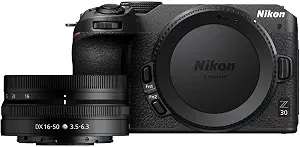
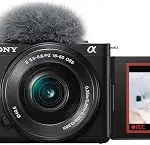
Nikon Z 30 with Wide-Angle Zoom Lens (ASIN B0B527QM4X)
The Nikon Z 30 earns the Best Overall label among these selections as an editorial fit for shoppers who want a clearly specified mix of still-photo and video features. Its CMOS sensor has an effective still resolution of 20.9 megapixels, while its video specification is 4K resolution. The included Nikkor Z DX 16-50mm f/3.5-6.3 VR lens makes this a lens-and-camera kit rather than a listing to assess by camera name alone. For a household considering one camera for varied everyday subjects, that combination gives several concrete details to compare without relying on an assumed result or a general-purpose promise.
The flip-out touchscreen selfie monitor is a particularly useful point of distinction if you expect to frame yourself while recording or want a screen that can face outward for composition. The camera’s continuous shooting specification is 11 frames per second, a figure worth considering if capturing a sequence of changing moments matters to you. Bluetooth, HDMI, USB, and Wi-Fi are listed for connectivity; think about which connections you actually expect to use, and verify the precise kit and included items in the offer. These features explain the Best Overall editorial choice here, but the label is not a claim that the Nikon is best for every photographer or every type of work.
During Black Friday shopping, look beyond a prominent camera-name match. Check that the offer identifies the Nikon Z 30 and the Nikkor Z DX 16-50mm f/3.5-6.3 VR lens, then weigh the screen, video, shooting-rate, and connection details against your own routine. If you rarely use a forward-facing screen, that feature may matter less to your decision than the lens or the connections you plan to use. If you often compose selfies or video, its flip-out touchscreen may be central. The useful question is not whether the listing sounds like a deal, but whether its exact configuration and listed capabilities suit the work you want to do.
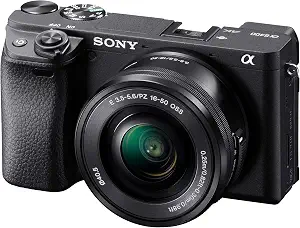
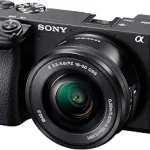
Sony Alpha a6400 Mirrorless Camera (ASIN B07MV3P7M8)
The Sony Alpha a6400 is labeled Best for Flip-Screen Framing because its listed screen is a flip screen, a relevant detail for shoppers who want to adjust their composition while facing the display. The camera has an APS-C sensor and includes a 16-50mm lens. Its Sony E (NEX) mount is another useful identifier to keep in view when researching a camera system or comparing listings. These facts make the a6400 a distinct option in this selection, especially if screen positioning is high on your checklist. The label reflects that particular priority; it does not imply a measured advantage over the other cameras.
Sony lists 4K (2160p) video and continuous shooting at 11 frames per second. Consider those specifications in relation to what you plan to record or photograph, instead of treating either figure as a promise about the outcome of a particular shoot. The included 16-50mm lens is part of the product configuration described here, so check that the offer retains it if that is the package you intend to buy. The provided facts do not specify additional screen functions, stabilization, or connection details, so base your comparison on the features actually stated for this listing.
For Black Friday, make the screen and lens the first things you verify in the exact offer, then decide how much the listed 4K video and shooting rate matter to your plans. If you want to compose using a screen that flips, this model merits a place on your shortlist. If another option’s supplied lens or listed screen description better matches your priorities, compare that specific difference rather than assuming the cameras are otherwise identical. The Best for Flip-Screen Framing designation is an editorial guide to one use case among these products, not a general ranking of all mirrorless cameras.
Key specs
Sensor size
APS-C
Lens
16-50mm Lens
Mount
Sony E (NEX)
Video
4K (2160p)
Screen
Flip Screen
Continuous shooting
11 frames_per_second
Start with the moments you want to capture
Write down the situations that matter before looking at offer language. A camera for family gatherings, personal video, and occasional sequences of movement may call for a different balance than one chosen mainly for framing yourself on screen. The Nikon Z 30 lists a flip-out touchscreen selfie monitor, 4K video, and continuous shooting at 11 frames per second. The Canon EOS R100 lists 4K video at up to 24 fps and up to 6.5 shots per second when set to One-Shot AF. Sony’s a6400 lists a flip screen, 4K (2160p) video, and 11 frames per second. Treat each as a separate set of facts, not as a guarantee of how a scene will look.
Then make a short priority list: screen arrangement, video specification, shooting-rate figure, sensor information, or included lens. Rank only the details that affect your likely use. This prevents a headline feature from distracting you from a more practical concern, such as whether the listed kit includes the lens you expect. For Black Friday, keep that list open as you review offers. It gives you a consistent way to compare the three models while avoiding assumptions about discounts, performance, or bundle contents that the actual listing does not confirm.
Compare Black Friday offers by their exact contents
A camera name alone does not tell you whether an offer matches the configuration you want. The Canon listing describes an RF-S18-45mm F4.5-6.3 IS STM Lens Kit. The Nikon listing names a Nikkor Z DX 16-50mm f/3.5-6.3 VR lens, while the Sony listing specifies a 16-50mm lens. Read the product title and offer details closely, and confirm that the model and lens shown are the ones you intend to consider. If a listing presents different options, do not assume that a feature or accessory from one configuration carries over to another.
During Black Friday, compare the full offer as presented, including its exact product variant and any contents explicitly stated there. The supplied information does not establish a sale price, discount, stock status, or promotion, so make those checks on the offer itself rather than relying on a general deal label. Keep your comparison grounded in verifiable details: model, lens, stated specifications, and the terms shown at checkout. If something important is unclear, pause rather than filling the gap with an assumption. This method makes a price comparison more meaningful because you are checking the same kind of package, not just similar product names.
Decide which screen arrangement suits your routine
Screens matter most when their positioning relates to how you compose. The Nikon Z 30 specifically lists a flip-out touchscreen selfie monitor, making it the clearest match here for someone who wants to see a screen while framing themselves. Sony’s a6400 is listed with a flip screen, which may appeal if screen movement is a priority, but the provided fact does not describe it as a touchscreen. Canon’s R100 lists a three-inch screen; its supplied details do not state that it flips. Keep those descriptions precise, and verify the actual listing if a particular screen action is essential to you.
Consider how often you will use the screen feature rather than treating it as a universal advantage. A person recording themselves may value the Nikon’s expressly described selfie monitor. Someone who mainly composes without facing the camera may place greater importance on the included lens or video specification. The Sony’s flip-screen description can guide shoppers with a framing priority, while the Canon’s screen-size detail helps identify what is specified for that model. For Black Friday, compare screen wording in the exact offer and do not infer unlisted functions from a product image or from another camera in the same category.
Read video and shooting specifications in context
Video labels are not interchangeable, so preserve each camera’s stated wording while comparing. Canon specifies 4K video at up to 24 fps. Nikon lists 4K resolution, and Sony lists 4K (2160p). The provided Nikon and Sony facts do not give the same frame-rate qualification as Canon’s, so do not supply one yourself. If a particular recording detail is important, inspect the exact product information for it instead of assuming the broad 4K label answers every question. Your shortlist should reflect the specifications you can confirm and the kinds of recording you expect to do.
Shooting-rate figures also need their stated conditions. Canon’s up to 6.5 shots per second applies when set to One-Shot AF. Nikon and Sony each list 11 frames per second, without that same condition in the supplied facts. These are specifications to weigh, not promises that every subject or setting will produce a particular sequence. Think about whether you photograph changing moments often enough for the figure to affect your choice. In a Black Friday comparison, note the exact wording beside each model so the feature that catches your eye does not overshadow a condition or a missing detail you still need to verify.
Match sensor and lens details to the package
The sensor details offer another useful point of comparison, but they are not stated in a uniform way. Canon specifies a 24.1 megapixel CMOS APS-C sensor. Nikon lists a CMOS sensor and an effective still resolution of 20.9 megapixels. Sony’s provided detail identifies an APS-C sensor without giving a still-resolution figure. Compare what is actually listed for each camera and avoid treating an unspecified number as evidence for or against a model. If a particular sensor or resolution detail is essential to your decision, confirm it in the product information for the exact offer you plan to buy.
The lens descriptions can be just as consequential as the body specifications when choosing a kit. Canon’s included lens has Optical Image Stabilization with up to 4 stops of shake correction. Nikon’s named lens is the Nikkor Z DX 16-50mm f/3.5-6.3 VR Lens; Sony’s listing names a 16-50mm lens. Do not transfer the Canon lens’s stabilization claim to another kit, or assume details beyond what each product record states. For Black Friday, match the lens description to the offer variant and decide whether the stated features align with your plans before comparing the overall package.
Make your Black Friday choice
A practical shortlist can be simple: choose the Nikon Z 30 if its flip-out touchscreen selfie monitor and listed feature mix align with your routine; consider the Canon EOS R100 if its specified sensor, kit lens, and lens stabilization are priorities; or focus on the Sony a6400 if a flip screen is central to how you frame. These are editorial ways to sort the options, not universal rankings. Before buying on Black Friday, verify the exact model, lens, and offer details, then compare only the specifications that matter to you. No promotion or price outcome is established here, so let the actual listing—not a broad label—make the final case.