EF ECOFLOW Solar Generator Delta 3 Classic with 220W Solar Panel, 1024Wh (ASIN B0FRMQPZF6)
Best Solar Generator Buying Guide — Black Friday Deals 2026
A solar generator choice starts with the jobs you want it to cover: charging personal devices, supporting a small set of household essentials, or providing more AC output for equipment with higher demands. Capacity, output, connections, and the included panel each answer different questions, so no single headline figure settles the decision. These three bundles range from a 292Wh Jackery to 1024Wh Jackery and EcoFlow options, with different output figures and solar panels. For Black Friday, compare the exact model and bundle shown in the offer rather than assuming similar names mean identical contents. The recommendations here reflect specific priorities among these products, not testing or market-wide awards.
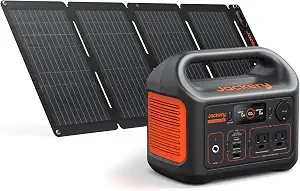
Jackery Solar Generator 300 and 40W Solar Panel (ASIN B0G429L5B4)
The Jackery Solar Generator 300 pairs a 292Wh power station with a 40W solar panel, making it the smallest-capacity option in this selection. Its 300W AC output, with a 600W peak surge, gives shoppers a defined starting point for deciding whether their intended equipment fits. That distinction matters: rated output and peak surge describe different limits, and a device’s requirements should be checked against the relevant figure rather than judged by the product name alone.
The port mix covers several kinds of everyday charging and AC use: two AC outlets, a 100W USB-C PD port, two USB-A ports, and a 120W car port. Before choosing it, list the devices you expect to connect and note which connection each one uses. The listed port types can help narrow the choice, but they do not establish how long any particular device will run. Runtime depends on details not provided here, so treat capacity as a comparison point rather than a promise about a specific outing or outage.
LiFePO4 chemistry is another stated feature to include in the comparison. The bundle’s 40W panel is relevant if you want a solar panel included, but the available details do not specify a recharge time. Consider whether the panel size and stated capacity fit your plans, and check the exact bundle contents before buying. For Black Friday, verify that the listing is for this Solar Generator 300 configuration with the 40W panel; a headline mentioning Jackery or a generator alone does not confirm the included accessories.
Best Budget is the editorial choice here for shoppers prioritizing a lower-capacity, 300W AC option with a panel in the named bundle. It is not a claim about sale pricing or performance against products outside this guide. This model may suit someone whose planned uses are modest and whose equipment can be powered within its stated output. If your priority is more stored energy or higher AC output, compare the larger-capacity options below instead of assuming this compact-capacity choice will cover every task.
Key specs
Capacity and AC output
292Wh,300W AC
Ports
2 AC outlets, a 100W USB-C PD port, 2 USB-A ports, and a 120W car port.
Rated and peak output
300W rated output (600W peak surge)
Battery chemistry
LiFePO4 chemistry
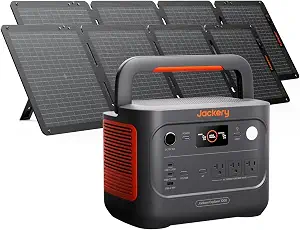
Jackery Solar Generator 1000 v2 and 2x100W Solar Panel,1024Wh LiFePO4
Jackery Solar Generator 1000 v2 and 2x100W Solar Panel,1024Wh LiFePO4 (ASIN B0D66VD3X4)
The Jackery Solar Generator 1000 v2 combines 1024Wh of capacity with 1,500W AC output and a 3,000W surge peak. That combination makes it the Best Overall editorial pick among these three for shoppers seeking a middle-ground configuration with substantial stated capacity and AC output. The label is a guide to the priorities represented by this product, not evidence of comparative testing or a claim that it is right for every household.
Its included solar bundle consists of two 100W solar panels. That is useful information when comparing what comes in the package, although the listed facts do not state a solar recharge duration. Check that the offer you are considering names the 1000 v2 and includes both panels; do not use a general product-family title as a substitute for confirming the variant. Black Friday listings can put bundles and stand-alone configurations near one another, so inspect the exact offer details before deciding whether the package matches your plan.
The stated 10ms UPS switchover may be relevant if you are considering backup behavior for equipment that needs a quick transfer to battery power. It does not by itself establish suitability for a particular device or guarantee that every setup will behave as desired. Confirm the equipment’s requirements and whether this transfer detail addresses them. The unit’s listed weight is 23.37 Lbs, another concrete consideration if you expect to move or store it; compare that figure with your own handling needs rather than inferring portability from the product name.
For a household comparing stored energy, AC output, panel inclusion, and transfer behavior together, this Jackery puts all four considerations on the table. Its capacity is higher than the 292Wh Jackery in this guide, while the EcoFlow option states higher AC output. Those facts help distinguish priorities but do not predict runtime or establish which product is best for an unlisted load. During Black Friday, assess the exact configuration and the equipment you want to support before treating a bundle as a match.
Key specs
Capacity
1024Wh
AC output
1,500W AC output
Surge output
3,000W surge peak
UPS switchover
10ms UPS switchover
Weight
23.37 Lbs
Included solar panels
2 * 100W Solar Panels
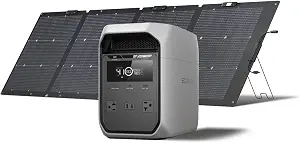
EF ECOFLOW Solar Generator Delta 3 Classic with 220W Solar Panel, 1024Wh
EF ECOFLOW Solar Generator Delta 3 Classic with 220W Solar Panel, 1024Wh (ASIN B0FRMQPZF6)
The EF ECOFLOW Solar Generator Delta 3 Classic is the choice for shoppers whose priority is higher stated AC output: it lists 1800W output and a 3600W surge. Its Best for Higher AC Output label identifies that particular strength among the products in this guide; it is not a broad performance verdict. The generator also has 1024Wh capacity, so shoppers can consider its stored-energy figure alongside output rather than treating the larger output number as a runtime estimate.
This bundle names a 220W bifacial solar panel and states recharge in just 5.8 hours with a 220W solar panel. Keep that qualification attached to the claim when comparing it with other bundles: the stated duration is tied to use with a 220W panel. The package’s named panel and the recharge detail give more information for planning than a panel wattage alone, but they do not establish what to expect in every real-world charging situation. For Black Friday, verify that the offer is the Delta 3 Classic bundle with the 220W panel, not merely another listing using the same brand or family name.
A 100W USB-C output is listed, along with a LiFePO4 battery. The product also states that it automatically switches to battery in under 10ms, a detail that may matter when considering backup for equipment sensitive to a power interruption. As with any transfer-time specification, consider the needs of the equipment you intend to connect; the stated figure does not confirm compatibility with a particular setup.
This EcoFlow may be the more relevant option if the output figure is the first filter in your shortlist and you also want a named solar panel in the bundle. If capacity, weight, or the specific connections available are decisive, compare those details directly with the other products; the facts provided here do not list every port or the EcoFlow’s weight. Black Friday can make a bundle look compelling at a glance, but the useful question is whether this exact configuration’s stated output, capacity, panel, and transfer detail fit your intended use.
Key specs
Output
1800W output (3600W surge)
USB-C output
100W USB-C Output
Battery
LiFePO4 Battery
UPS transfer
automatically switches to battery in under 10ms
Solar recharging
Recharge in just 5.8 hours with a 220W solar panel.
Solar panel
220W bifacial solar panel
Separate the energy reserve from the power ceiling
Capacity and output answer different planning questions. A capacity figure in watt-hours describes the stored-energy scale presented for comparison, while the AC output figure gives a limit to check against equipment requirements. Neither one alone tells you how long a particular appliance will run. Start with a written list of the devices you would actually use, their power needs, and whether they would operate together or at different times. Then compare the relevant requirements with the product’s stated output and capacity without turning those specifications into an unsupported runtime estimate.
The distinction is visible across these options. The Jackery Solar Generator 300 lists 292Wh and 300W AC output, while the Jackery 1000 v2 and EcoFlow Delta 3 Classic each list 1024Wh. Their stated AC output figures differ: the Jackery 1000 v2 lists 1,500W, and the EcoFlow lists 1800W. These numbers can help you rule out an option that does not meet a known requirement, but they cannot settle every use case. Surge figures are separately stated for the Jackery models and EcoFlow, so check the appropriate figure for the equipment under consideration.
Black Friday comparisons are clearer when you put capacity, rated or stated output, and surge figures in separate columns. Avoid choosing based only on a large-looking number in a product title. Check whether the model name, detailed specifications, and bundle description all refer to the same version. If a device’s requirements are unclear, confirm them before purchase rather than assuming a generator’s headline figure guarantees it will work.
Match the panel bundle to your charging plan
The included panels distinguish these bundles, but panel inclusion should not be confused with a universal recharge promise. The Jackery Solar Generator 300 is named with a 40W panel, the Jackery 1000 v2 bundle includes two 100W panels, and the EcoFlow bundle includes a 220W bifacial panel. Those details establish what each named package offers on the panel side; they do not establish identical charging conditions or make panel wattage a stand-in for a guaranteed daily energy yield.
The EcoFlow listing states recharge in just 5.8 hours with a 220W solar panel. Keep the stated condition in view when deciding how useful that detail is to your plans. The supplied facts do not give a comparable recharge duration for either Jackery bundle, so it would be misleading to infer one or rank their charging speed from panel wattage alone. If a charging schedule matters, look for terms attached to the specific offer and confirm they apply to the exact panel and generator combination being sold.
For a Black Friday deal, verify the complete configuration before comparing offers: generator model, panel count or wattage, and any stated charging qualification. Ask yourself whether you need a panel included now or are choosing primarily for the power station. The answer can affect which bundle is more relevant, even when two options have similar capacity. Use the listed facts to compare package contents, and leave conditions not specified in the listing open rather than filling them in with assumptions.
Treat ports and backup transfer as separate needs
A generator can have an appealing capacity figure yet still be a poor fit for a particular setup if the connections or backup behavior do not match what you need. The Jackery 300 lists two AC outlets, a 100W USB-C PD port, two USB-A ports, and a 120W car port. Those specifics give shoppers a useful port checklist. The EcoFlow lists a 100W USB-C output, while the facts provided for the Jackery 1000 v2 focus instead on capacity, AC output, surge, UPS switchover, weight, and panels. Do not interpret a fact not listed here as proof that a product lacks a feature.
UPS transfer details deserve their own check. The Jackery 1000 v2 states a 10ms UPS switchover; the EcoFlow says it automatically switches to battery in under 10ms. These descriptions can help identify products for shoppers who are considering backup transfer, but they do not confirm that a specific computer, medical device, or other piece of equipment is suitable. Check the equipment maker’s requirements and the generator’s complete product information before relying on a transfer specification.
During Black Friday, use your device list to compare the needed port types and any backup requirement against the exact product details. This is more useful than choosing by outlet count alone, since devices may use different connections and have different demands. If backup behavior is not important to your plan, it need not dominate the shortlist; if it is important, make the stated transfer detail a deliberate checkpoint rather than an afterthought.
Plan around weight, placement, and likely use
Before buying, picture where the generator will be used and where it will be kept between uses. The Jackery 1000 v2 lists a weight of 23.37 Lbs, which offers a concrete point of reference for that model. The provided facts do not state the weights of the other two options, so this guide cannot make a complete weight ranking. Consider your own storage location and handling routine, and seek the relevant product details if moving the unit is a deciding factor.
Think through a realistic use scenario rather than an idealized one. Someone who mainly wants to connect a small selection of devices may begin with the Jackery 300’s 292Wh capacity and listed port mix, then check whether its 300W AC output suits those devices. A shopper planning around more stored energy may compare the two 1024Wh options, then use output, transfer behavior, and panel information to distinguish them. These are ways to organize a shortlist, not guarantees about what a generator will power or for how long.
Black Friday can draw attention to bundle names and headline specifications, but your space and routine remain relevant after the offer is gone. Confirm the exact model, consider how you will position the generator and panel, and check whether the listed weight and included components make sense for your intended arrangement. Avoid assuming that a panel will fit a particular location or that a product is easy to carry unless the details establish it.
Compare the exact Black Friday configuration
When several listings look similar, compare the model and bundle line by line. A useful checklist includes the generator name, capacity, AC output, surge figure where provided, battery chemistry where provided, panel contents, and any stated UPS or recharge qualification. This keeps the decision tied to verifiable details instead of a broad brand label. The three products here illustrate why: their capacities, output figures, and bundled panels differ, and the EcoFlow supplies a specific solar recharge statement that is not given for the Jackery bundles.
Do not assume that an offer is better because its title contains more accessories or a larger number. First decide which features are relevant to your planned loads, then confirm that the offer actually includes the configuration those features describe. A bundle title can be a starting point, but the detailed listing should resolve uncertainties about the exact model and panel contents. If a specification or condition is unclear, leave it unverified rather than treating it as a benefit.
A careful Black Friday comparison also avoids inventing a discount baseline. The information in this guide does not establish a current sale, past price, stock status, or seller policy. Compare the offer you see with your needs and with the exact specifications of the product, not with an assumed promotion. That approach helps keep a seasonal purchase decision grounded in what the listing confirms and what you actually plan to use.
Make your Black Friday choice
The right solar generator depends on which constraint matters most: the Jackery 300’s 292Wh capacity and listed ports, the Jackery 1000 v2’s 1024Wh capacity and 10ms UPS switchover, or the EcoFlow’s 1800W output and stated solar-recharge detail. Start with your equipment, then confirm the bundle and specifications that address its needs. During Black Friday, verify the exact model and included panel before comparing offers; a seasonal label cannot substitute for a configuration check. Choose only what the stated facts support, and treat unprovided runtime, compatibility, and charging conditions as questions to resolve rather than promises.