A graphics card shortlist should begin with the work you expect it to support, then narrow around the specifications that matter to your setup. This guide considers three cards through that lens: memory, listed clock details, cooling design, outputs, and other features that can help define a buying priority. Those details describe the products; they do not establish comparative performance. During Black Friday, treat a promotion as a reason to inspect the complete listing, not as proof that a card suits your needs. Check the exact model and variant, compare the offer with your requirements, and leave unlisted details open until you can verify them.
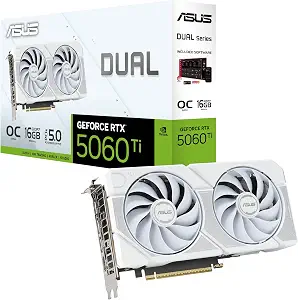
ASUS Dual GeForce RTX 5060 Ti 16GB GDDR7 White OC Edition Graphics Card
ASUS Dual GeForce RTX 5060 Ti 16GB GDDR7 White OC Edition Graphics Card (ASIN B0G1FVLWSG)
Best Overall is the editorial pick for shoppers who want a combination of substantial listed memory, several display connections, and a choice between two BIOS profiles. The ASUS Dual GeForce RTX 5060 Ti 16GB GDDR7 White OC Edition Graphics Card has 16 GB of GDDR7 memory. Its GPU clock is listed as 2632 MHz in OC mode and 2602 MHz in Default mode. Those are useful details for comparing the card with other candidates, but they do not by themselves predict results for a particular game, application, or resolution. If you are weighing this card during Black Friday, focus on whether its stated configuration matches your priorities rather than assuming the OC label guarantees a particular experience.
The outputs are one native HDMI 2.1b connection and three native DisplayPort 2.1b connections. That arrangement gives shoppers concrete connection details to compare with their displays and planned setup. Check the connectors your screens use before choosing; the listed ports do not establish what cables are included or how a specific display will behave. The card also has a 2.5-slot design, a practical detail to check against the available space in a build. The supplied facts do not give its overall dimensions, so confirm fit using the exact listing and your system information rather than estimating from the slot description.
Dual BIOS lets you toggle between Quiet and Performance BIOS profiles. This gives a shopper a defined configuration choice, though the names alone do not establish noise levels or measured performance. That distinction matters when comparing product copy: a feature can clarify what controls are offered without settling how the card will perform in an individual setup. The Best Overall label reflects the combination of listed features among these selections, not a test result or a claim that it leads every category. For a Black Friday decision, compare this exact white OC variant and its stated memory, ports, clock modes, and profile options with the competing listings. Choose it when those documented details form a good match for your plan, and verify any unanswered fit or system questions before checkout.
Key specs
Graphics memory
16 GB
GPU clock
2632 MHz (OC mode)/ 2602 MHz (Default mode)
Video outputs
1 x Native HDMI 2.1b, 3 x Native DisplayPort 2.1b
Slot design
2.5-slot design
BIOS profiles
Dual BIOS lets you toggle between Quiet and Performance BIOS profiles
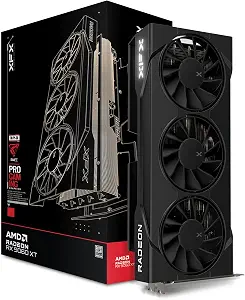
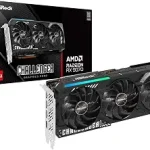
XFX Swift AMD Radeon RX 9060 XT OC Triple Fan Gaming Edition
XFX Swift AMD Radeon RX 9060 XT OC Triple Fan Gaming Edition (ASIN B0F8128Y33)
Best for a triple-fan cooling design is the editorial label for the XFX Swift AMD Radeon RX 9060 XT OC Triple Fan Gaming Edition. Its product name and listed cooling detail identify an XFX SWFT Triple Fan Cooling Solution, which can help shoppers who want to compare cards by cooling configuration. The supplied facts do not establish temperatures, noise, or performance, so treat the design as a feature to consider rather than a promise about outcomes. The GPU is listed as AMD RX 9060 XT, with 16 GB of GDDR6 memory. During Black Friday, compare those exact model and memory details with the card you intend to buy; do not assume a similarly named listing has the same configuration.
Clock information is given as a base clock of 1900 MHz and a boost clock up to 3320 MHz. The qualification “up to” is part of the listed boost figure. These numbers can help distinguish specifications across listings, but they do not establish sustained clocks or the experience in a particular task. A shopper comparing cards for gaming or other graphics work should first identify the intended workload, then use these stated details as part of a broader decision instead of treating clocks as a direct performance verdict.
The listed interface is PCI-Express x16, and the outputs are HDMI 2xDP. Check the exact connector arrangement against your displays and planned system; the provided output description does not state port versions. The triple-fan design may be a priority for someone intentionally selecting by cooling layout, but it should not substitute for checking system fit or any other requirements. No dimensions are provided here, so use the complete product listing for fit details you need. The Best for a triple-fan cooling design label explains why this card stands out within this guide, not a measured superiority claim. On Black Friday, inspect the complete offer and exact RX 9060 XT OC variant, confirm the details that matter to your setup, and make the decision on verified information rather than assuming a headline promotion settles the choice.
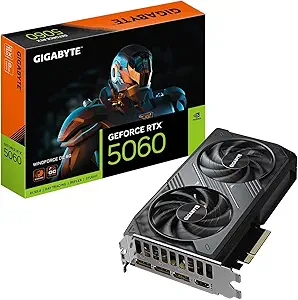
Best Budget is the editorial label for the GIGABYTE GeForce RTX 5060 WINDFORCE OC 8G Graphics Card, based on its stated feature set rather than a claim about its current price. Its listed memory is 8GB GDDR7 with a 128bit memory interface, and its GPU clock speed is 2512 megahertz. Those figures give you specific points to compare as you narrow a shortlist. They do not establish how the card will perform in a particular workload, so weigh them alongside your own needs and other verified information. Black Friday headlines can draw attention to a product, but this label does not mean the listing is discounted or that its price is lower than another card’s.
The WINDFORCE cooling system and two listed fans are additional identifying details. They describe the cooling design without establishing temperatures, noise, or results under load. If cooling configuration matters to you, compare the exact product information rather than treating a system name or fan count as a measured outcome. The card lists PCIe 5.0 as its interface; confirm that the exact card and your system are suitable together using information for both, since the interface fact alone cannot answer every compatibility question.
For displays, the card lists DisplayPort and HDMI outputs. The supplied information does not specify their counts or versions, so do not assume a particular port arrangement: check the detailed listing against the displays and connections you intend to use. The stated dimensions are 7.83″L x 4.57″W, which gives you concrete measurements to compare with the space available in your system. Check the same measurement convention against your build’s requirements and seek any other clearance details you need. The Best Budget label is an editorial choice among the featured cards, not a verified price ranking. While comparing Black Friday offers, look at the exact RTX 5060 WINDFORCE OC 8G variant and the complete listing, then decide whether its memory, interface, cooling details, ports, and dimensions align with your priorities. Do not infer value from a promotion headline alone.
Key specs
Memory
8GB GDDR7 128bit memory interface
Interface
PCIe 5.0
Cooling
WINDFORCE cooling system
GPU clock
GPU Clock Speed 2512 megahertz
Video outputs
DisplayPort, HDMI
Fans
Number of Fans 2
Dimensions
7.83″L x 4.57″W
Turn your intended workload into a short checklist
Start by describing what you want the GPU to do in ordinary terms: which games or creative applications you expect to use, what displays you plan to connect, and whether the card must fit an existing system. Those answers help separate relevant specifications from details that are interesting but not decisive for you. The supplied facts identify product configurations; they do not establish performance in a specific workload. Avoid choosing from a clock figure or a model name alone when the task you care about has not been verified.
Next, sort your requirements into must-haves and preferences. Memory capacity, video outputs, physical design, and interface can all matter, but their importance depends on your setup. For instance, someone planning several display connections may want to check the ASUS card’s stated HDMI and DisplayPort arrangement, while someone comparing listed memory can place the 16 GB configurations alongside the GIGABYTE card’s 8GB. Those are specification differences, not proof of which card is faster or the right choice for every buyer.
Use the same checklist when Black Friday listings compete for attention. A deal headline cannot tell you whether the exact model, ports, or physical design fit your plan. Compare product names and configurations first, then examine whatever offer details are actually shown. If a required specification is not provided in this guide, verify it in the complete listing before deciding. A clear list of needs makes it easier to distinguish a relevant offer from one that merely looks compelling.
Read memory and clock figures as separate clues
Memory capacity and GPU clock figures describe different aspects of a card, so consider them separately rather than combining them into a single measure of quality. The ASUS and XFX selections each list 16 GB of memory, while the GIGABYTE lists 8GB GDDR7 with a 128bit memory interface. The XFX specifies GDDR6 and the ASUS specifies GDDR7. These facts help identify the configurations on offer, but memory labels alone do not establish how a card will handle your chosen game, application, or settings.
Clock entries also require careful reading. The ASUS gives separate OC mode and Default mode figures. The XFX lists a base clock and a boost clock qualified as “up to” a stated value. The GIGABYTE lists a GPU clock speed. These descriptions are not identical, and comparing their numbers as if they were measured in the same conditions could mislead. Keep each manufacturer’s wording intact and avoid treating a higher listed figure as a guaranteed advantage in use.
For a Black Friday shortlist, note the exact memory type and capacity alongside the clock wording for each specific variant. Then look for reliable information about the workloads you care about if you need to predict application performance; these supplied specifications cannot answer that by themselves. This approach keeps the comparison useful without turning isolated figures into promises. It also helps catch listing mismatches, such as a product page that uses a familiar family name but describes a different configuration from the card you intended to evaluate.
Map the outputs to the screens you plan to use
Video outputs are easy to overlook when comparing GPUs, yet they are among the most directly checkable details in these records. The ASUS specifies one native HDMI 2.1b and three native DisplayPort 2.1b outputs. The XFX lists HDMI 2xDP, without giving port versions in the supplied facts. The GIGABYTE lists DisplayPort and HDMI, without specifying counts or versions here. Keep those distinctions in mind instead of assuming all three cards offer the same connector arrangement.
Write down the inputs used by your displays and the connections you expect to make. Compare that list with the exact output description for the card under consideration. If you need information about a port version, adapter, cable, or supported display configuration that is not included here, confirm it in the complete product information before buying. The mere mention of HDMI or DisplayPort does not establish every detail of a particular connection.
This check is especially worthwhile during Black Friday, when shoppers may be scanning several listings quickly. Confirm the exact model and variant rather than relying on a product-family title or image. A listing that makes the connection arrangement clear can help you make a more informed shortlist; if a necessary detail remains unclear, pause and verify it instead of assuming. Ports should be a practical fit for your screens, not a feature you discover only after choosing a card.
Treat cooling and physical layout as questions to verify
Cooling descriptions identify design choices, but they do not provide measured results. The GIGABYTE lists a WINDFORCE cooling system and two fans; the XFX identifies an SWFT Triple Fan Cooling Solution. The ASUS fact set instead highlights a 2.5-slot design and Dual BIOS profiles. Those descriptions offer useful comparison points, but they do not establish noise, temperatures, or how a card will behave in a particular system. Decide which design details matter to you, then seek verified information for any outcome you need to predict.
Physical fit deserves its own check. The ASUS’s 2.5-slot description communicates a slot design, while the GIGABYTE listing provides dimensions as 7.83″L x 4.57″W. The supplied XFX details do not include dimensions. Do not use one kind of measurement as a substitute for another or assume that an unlisted measurement means a card will fit. Compare the exact card’s complete dimensions and requirements with the space and configuration in your system.
A Black Friday offer does not change these practical questions. Before checkout, match the listing’s exact model and variant to the physical details you verified. If the information you need is missing or ambiguous, seek clarification rather than inferring it from the number of fans, a cooling-system name, or a product photo. That evidence-first step can prevent a tempting offer from distracting you from the basic question of whether the card’s design suits your build.
Compare the complete listing before acting on an offer
Treat Black Friday as a time to compare listings, not as evidence that any particular GPU is on promotion. No offer price, discount, stock status, or seller policy is established by the product details in this guide. Look at the exact card variant and the terms presented in the listing you are considering. Make sure the configuration you intend to buy matches the product name and stated specifications, particularly when multiple versions share a model family.
A careful comparison can be simple: write down the specifications that matter to you, then check each candidate against them. The ASUS provides specific outputs and two BIOS profiles; the GIGABYTE identifies its memory, interface, cooling system, outputs, and dimensions; the XFX lists its memory, clock details, cooling design, interface, and output description. Each card has a different set of documented details. None of those facts establishes a universal winner or resolves every question about your system.
If the offer appears attractive, assess it only after confirming the exact product and any details needed for your decision. Compare the complete terms shown to you and do not assume that a promotion guarantees savings or availability. When a specification important to your use is not present, find dependable information before committing. This keeps a Black Friday purchase grounded in the configuration you actually want, rather than in urgency, a product-family name, or an unverified assumption about what the listing includes.
Make your Black Friday choice
The strongest GPU choice here depends on which documented features answer your needs: memory and clock descriptions, display outputs, cooling design, physical details, or BIOS options. The labels in this guide are editorial ways to organize those priorities, not test results or market-wide awards. Before acting on a Black Friday offer, verify the exact variant, check fit and connections against your system, and review the complete listing. If a key detail remains uncertain, investigate it rather than filling the gap with an assumption. That final check matters more than a promotion headline.